AI Rehab
The shift towards intelligent gamified rehabilitation
The Shift Towards Intelligent Gamified Rehabilitation
One of the biggest hurdles in neuro-rehabilitation is patient compliance. Traditional therapy exercises are often repetitive, exhausting, and for many children and stroke survivors, quite boring. This leads to a high dropout rate, which stalls the critical neuroplasticity required for recovery.
Therapy Disguised as Play
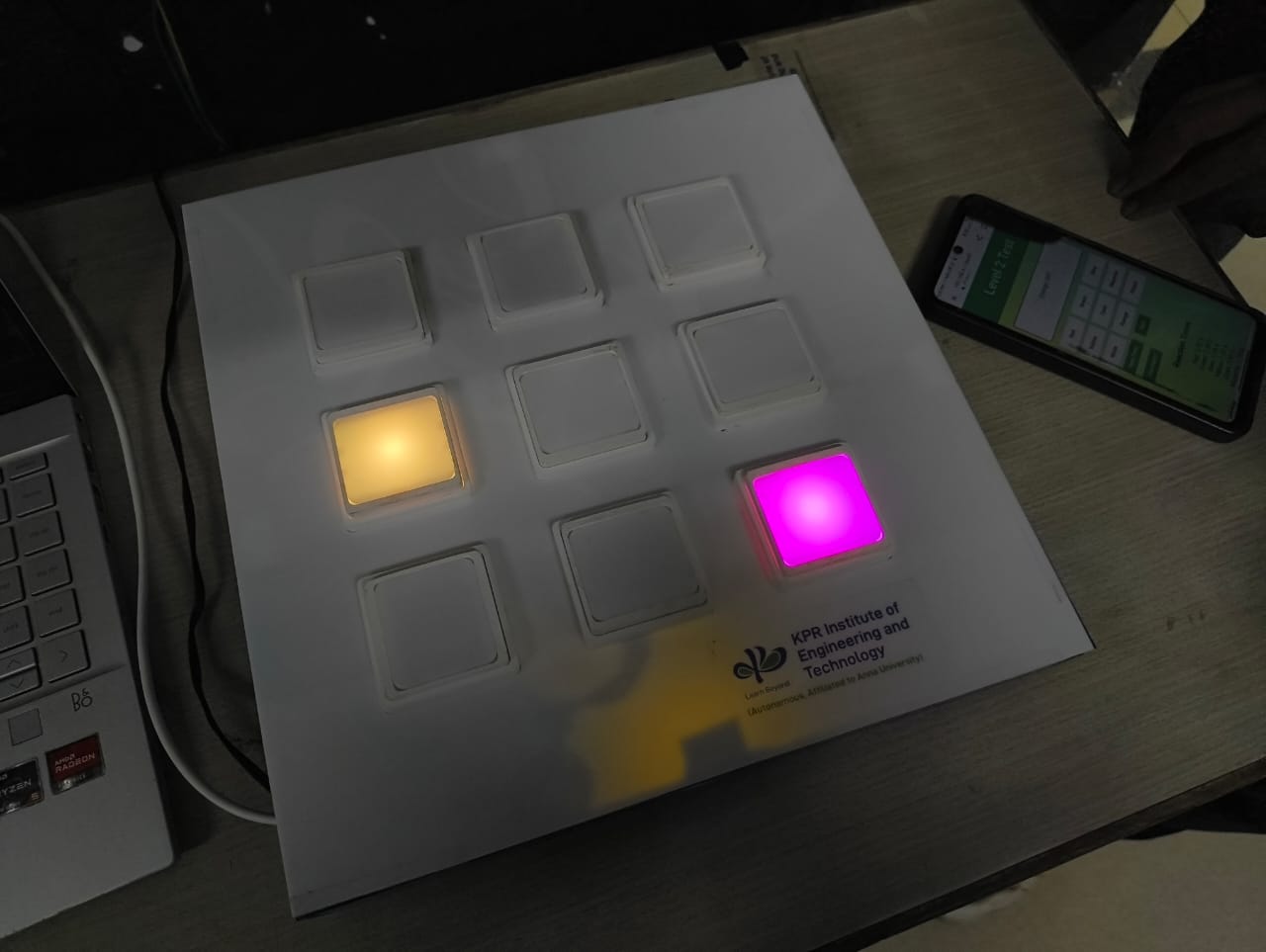
By introducing an interactive LED-button matrix with audio-visual feedback, we can completely change the perception of therapy. When children engage with devices like NeuroGlow, they perceive it as a toy rather than a medical device.
This simple psychological shift leads to an astounding 40-50% higher compliance rate compared to conventional therapies.
AI Personalization
Gamification alone isn't enough; the therapy must be clinically effective. This is where AI-driven personalization steps in. The system continually captures objective data—accuracy, speed, and response patterns. The AI algorithm then automatically scales the difficulty of the game in real-time, ensuring the patient is always challenged just enough to promote neuroplasticity, but never so much that they become frustrated.